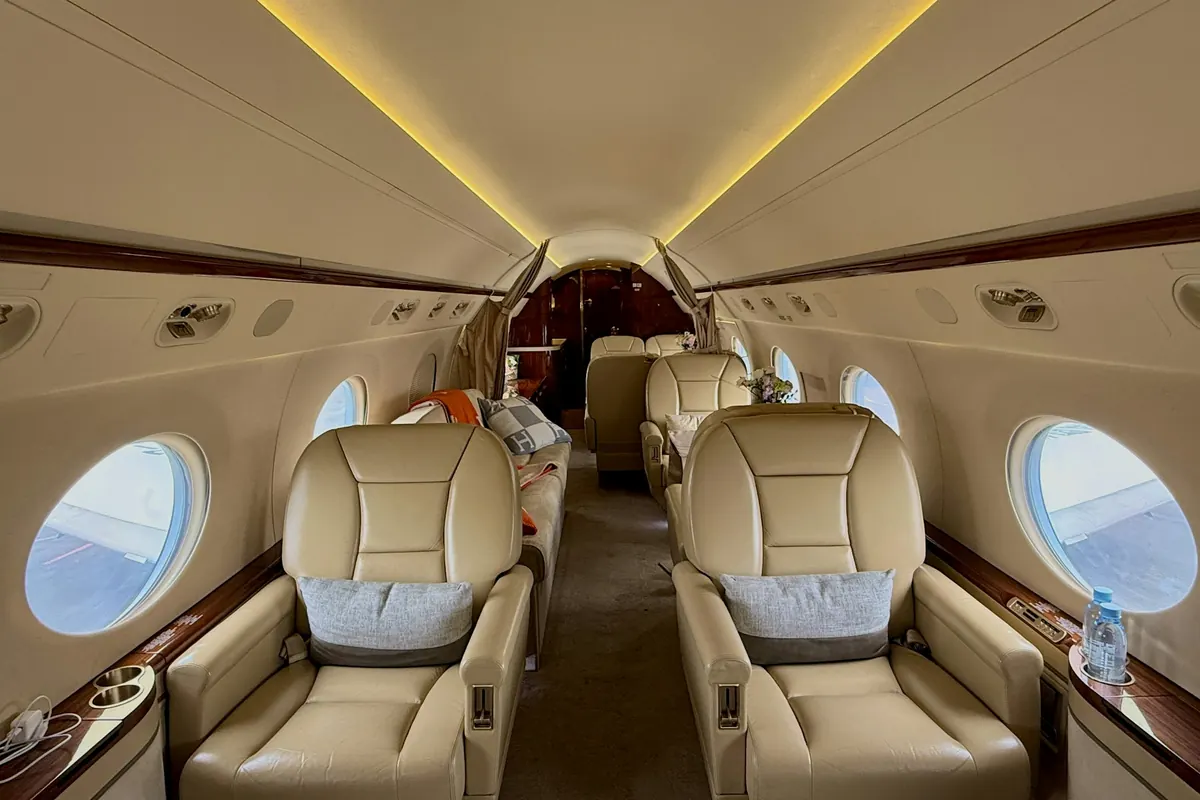
Private jet charter is not priced from a fare calendar. The price of a trip depends mostly on which aircraft can fly it and how far that aircraft has to travel to reach you. That is why flexibility, even a few hours of it, can change a quote more than any discount code ever could.
Here is how timing moves the number, and how much give you need to make a difference.
Why timing changes the price
Every charter aircraft has a home base and a schedule. When you ask for a flight, the operator works out how to get an aircraft to your departure airport, fly your trip and get it home or to its next job. Three costs depend on timing:
- Positioning. If the nearest suitable aircraft is two hours away at your preferred time, you pay for those two hours flown empty. If another one lands near you an hour later, that cost can disappear.
- Crew duty and rest. Crews work within legal duty limits. A departure that would stretch a crew's day may force a second crew or an overnight, both of which are billed.
- Demand. On peak days, the aircraft that are left tend to be the ones farther away or larger than you need.
How much flexibility helps
You don't need to be endlessly flexible. Most of the benefit comes from saying clearly what you can live with. The table shows the typical effect of different kinds of flexibility. The figures are rough estimates against a standard quote for the same trip; they vary by route and season, and they don't simply add together.
| What you can flex | What it lets your advisor do | Typical effect, est. |
|---|---|---|
| Departure time, a few hours | Use an aircraft finishing a nearby trip, or a crew already on duty | Often 5–15% less |
| Departure day, one either side | Avoid a peak day and choose from more aircraft | Often 5–15% less |
| Airport, a nearby field | Use aircraft based there and lower fees | Often 3–10% less |
| Date and time, fully | Match an empty leg on a fixed route and time | Often 25–75% less |
The peak days to avoid if you can
Demand for private aircraft bunches around holidays and events. Thanksgiving week, the days before Christmas and after New Year, Presidents' Day weekend in ski towns, spring break, Memorial Day, the Fourth of July and Labor Day all see heavy demand. So do major sporting and festival weekends in the host city.
The worst slots are predictable: Friday afternoons out of big cities and Sunday afternoons and evenings back. Leaving on Thursday or returning on Monday morning often opens up aircraft that were already booked for the weekend rush.
Round trips and the days in between
Flexibility also matters for how long you stay. On a short stay, the aircraft and crew usually wait for you. You pay daily minimums, often one to two billed hours for each day without much flying, plus crew hotels and per diems. On a longer stay, the operator may fly the aircraft home and send it back to collect you, which costs two extra empty legs.
Somewhere in the middle there is a crossover, and it differs by route. If your dates are loose, your advisor can price both ways and show you where it falls.
Tip. Give a window, not just a time. "Any time Thursday after 10 a.m." gives your advisor far more to work with than "Thursday at 2 p.m.", and you can still say which time you'd prefer.
Flexibility on the way home
Return flights are where many travellers lose money without noticing. Everyone wants to leave a ski town or a beach house on Sunday afternoon, so that is when aircraft are scarcest and positioning distances are longest. A Monday morning return, or a Sunday departure before noon, often opens up aircraft that are already booked for the evening rush.
Day trips and crew duty
A same-day round trip avoids hotel costs, but it has to fit inside the crew's legal duty day, which counts from the time they report until the last landing. A long meeting plus two flights can push past it. When that happens, the operator adds a second crew or an overnight, and the price jumps. Telling your advisor the earliest you can leave and the latest you need to be back lets them build the day around those limits.
Booking early or late
There is no fixed rule that early is cheaper. Booking early gives you the widest choice of aircraft, which matters most for holidays and big events. Booking late can turn up an aircraft that has just become free, or an empty leg, but you take what is available. If your dates are fixed and fall on a peak day, early is almost always better. If your dates are open, a late request can work well.
How to share your flexibility
- Put the hard limits first. A meeting at 3 p.m. or a dinner you can't miss is a fixed point. Everything else is negotiable.
- Say which direction you can move. Earlier, later or both, and by how much.
- Mention empty legs. If you'd fly on one, say so, and say how you'd get home if it were cancelled.
- Share the return early. Even a rough return date lets your advisor compare an aircraft that waits for you with two separate one-ways, and choose the cheaper pattern.
- Name nearby airports you'd use. Westchester instead of Teterboro, Fort Lauderdale Executive instead of Miami, Burbank instead of Van Nuys.
What flexibility doesn't change
Being flexible never means a lesser operator or a shortcut. Every option is still flown by a certificated Part 135 air carrier, crews keep to the same duty and rest rules, and the quote still includes the federal excise tax and known fees. Flexibility only changes which aircraft can do the job, and how much empty flying you pay for along the way.